And on we go with the next coding agent in my blog series. This time, I tested Qwen Code and wrote everything up for you.
As a test, I gave it the task of extending an existing piece of software of mine. It is not a super complicated task, but one that requires extending existing code and potentially touching several files. Let's see how Qwen Code fares.
The Mission
To put Qwen Code to the test, I gave it a task from the to-do list for my Webhook Browser Extension: implementing a grouping feature for webhooks. You could almost call it a busywork task. The feature is useful, but not necessarily the most creative challenge, making it a perfect candidate for disrupting your own "programming vibe."
Setup: The Fast Track to the Agent
Setting up Qwen Code is refreshingly straightforward. The agent runs directly in the terminal and is installed via NPM:
npm install -g @qwen-code/qwen-code
The connection uses an OpenAI-compatible interface, for which you only need an API key from Alibaba Cloud's "Model Studio." With a generous starting allowance of one million tokens for the "Qwen-Plus" model, I could get started right away. There is also an open-source model. However, I decided to try one of Alibaba Cloud's so-called flagship models.
export OPENAI_API_KEY="your_api_key_here"
export OPENAI_BASE_URL="https://dashscope-intl.aliyuncs.com/compatible-mode/v1"
export OPENAI_MODEL="qwen3-coder-plus"
After that, you can bring Qwen Code to life directly using the qwen command.
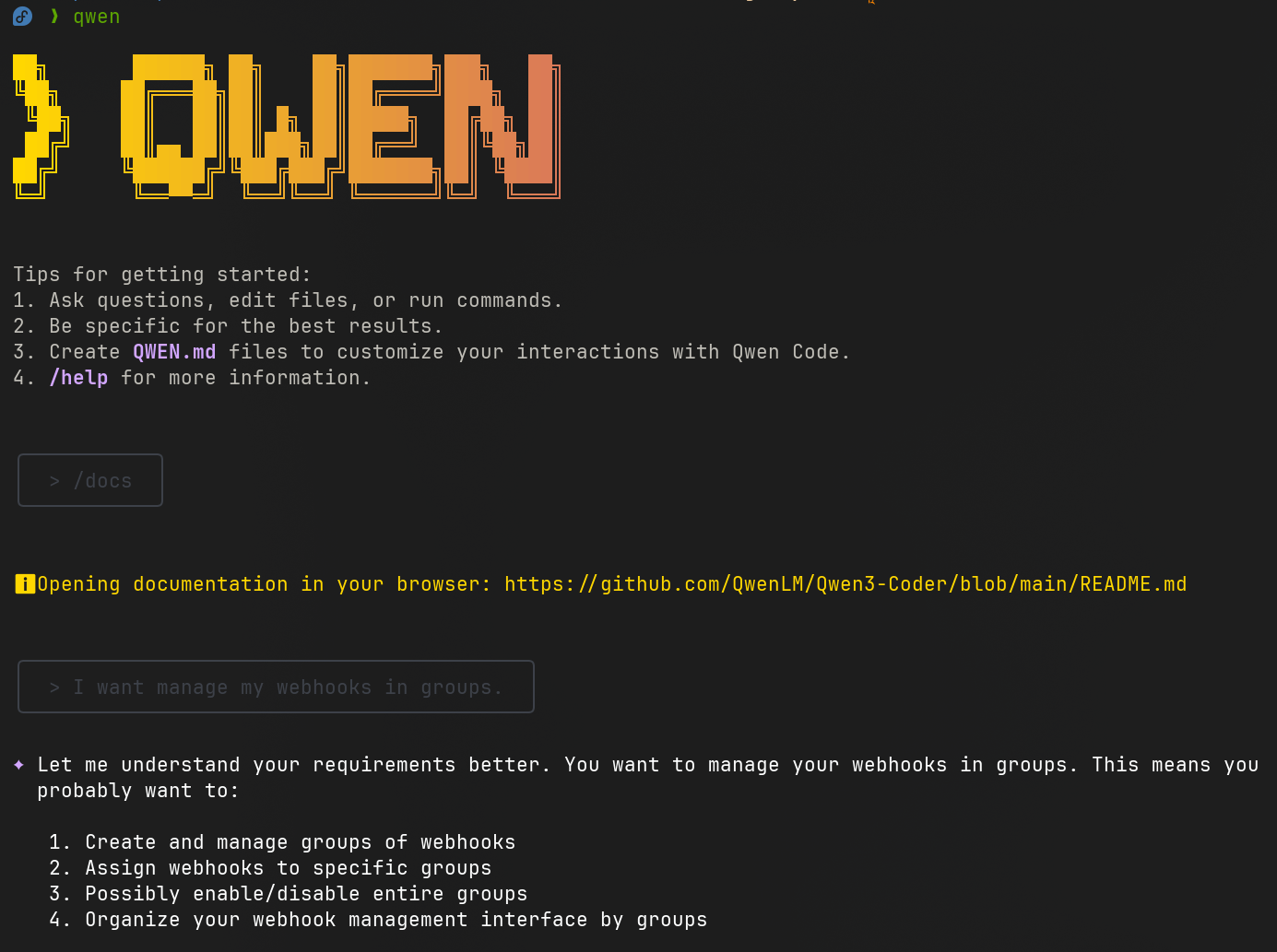
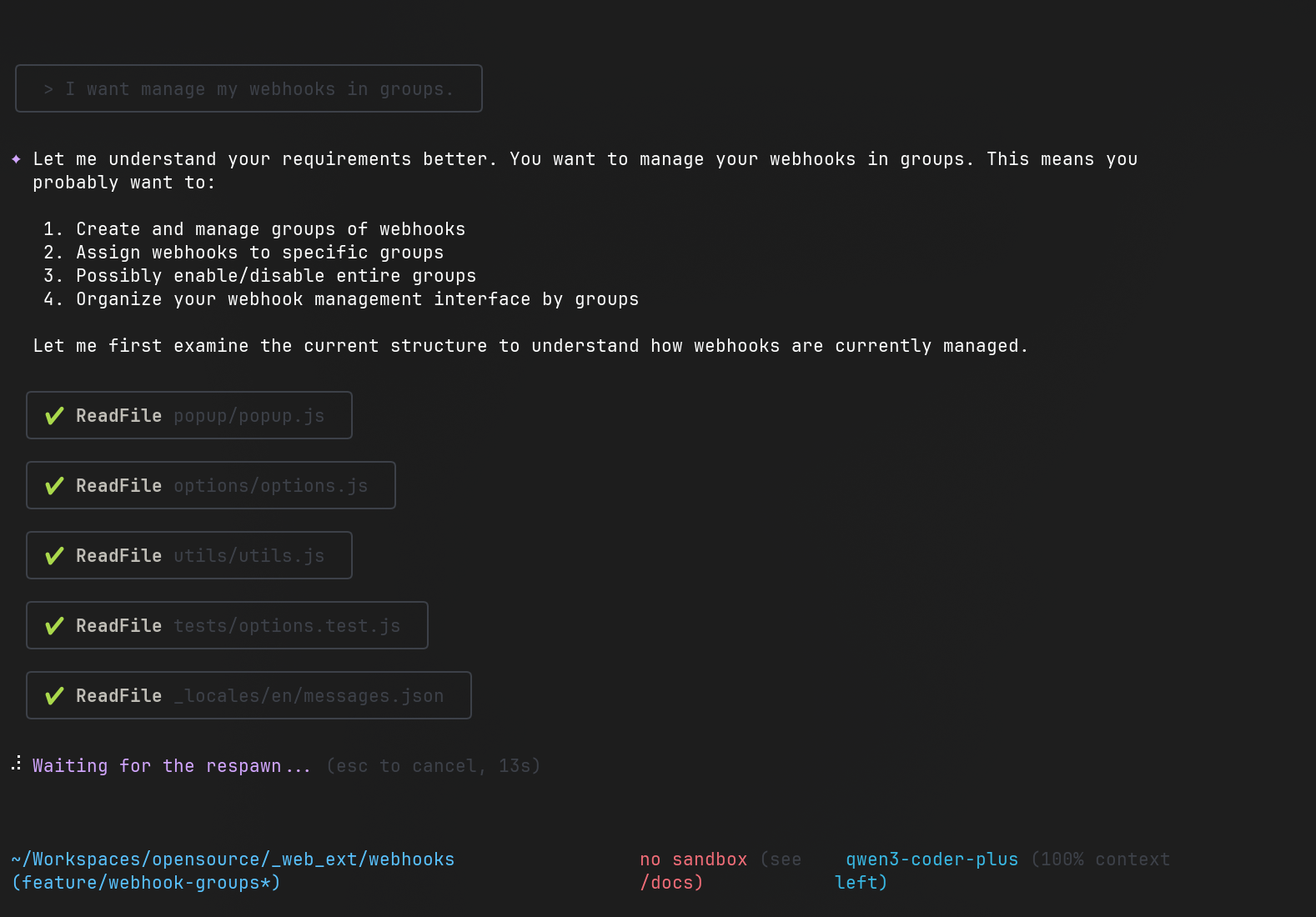
My prompt could hardly have been simpler: "I want to manage my webhooks in groups." What happened next was perfect proof of how an AI agent supports a developer's flow:
Autonomous Analysis and Planning
Instead of me having to dig through the code, Qwen took over that task. The agent independently analyzed the relevant project files (popup.js, options.js, tests/options.test.js, etc.) to understand the extension's context and structure. Based on this, it created a clear plan, which it presented to me for confirmation.
Vibe factor: Extremely high. The tedious first step of getting up to speed and planning was taken off my hands entirely. I could remain at a higher level of abstraction and did not have to deal with implementation details.
Implementation as a Copilot
Qwen began systematically working through the plan. It modified the data structure, adapted the user interface, updated the unit tests, and even added the necessary localization strings. The best part: I could watch the agent, follow its decisions, and intervene at any time.
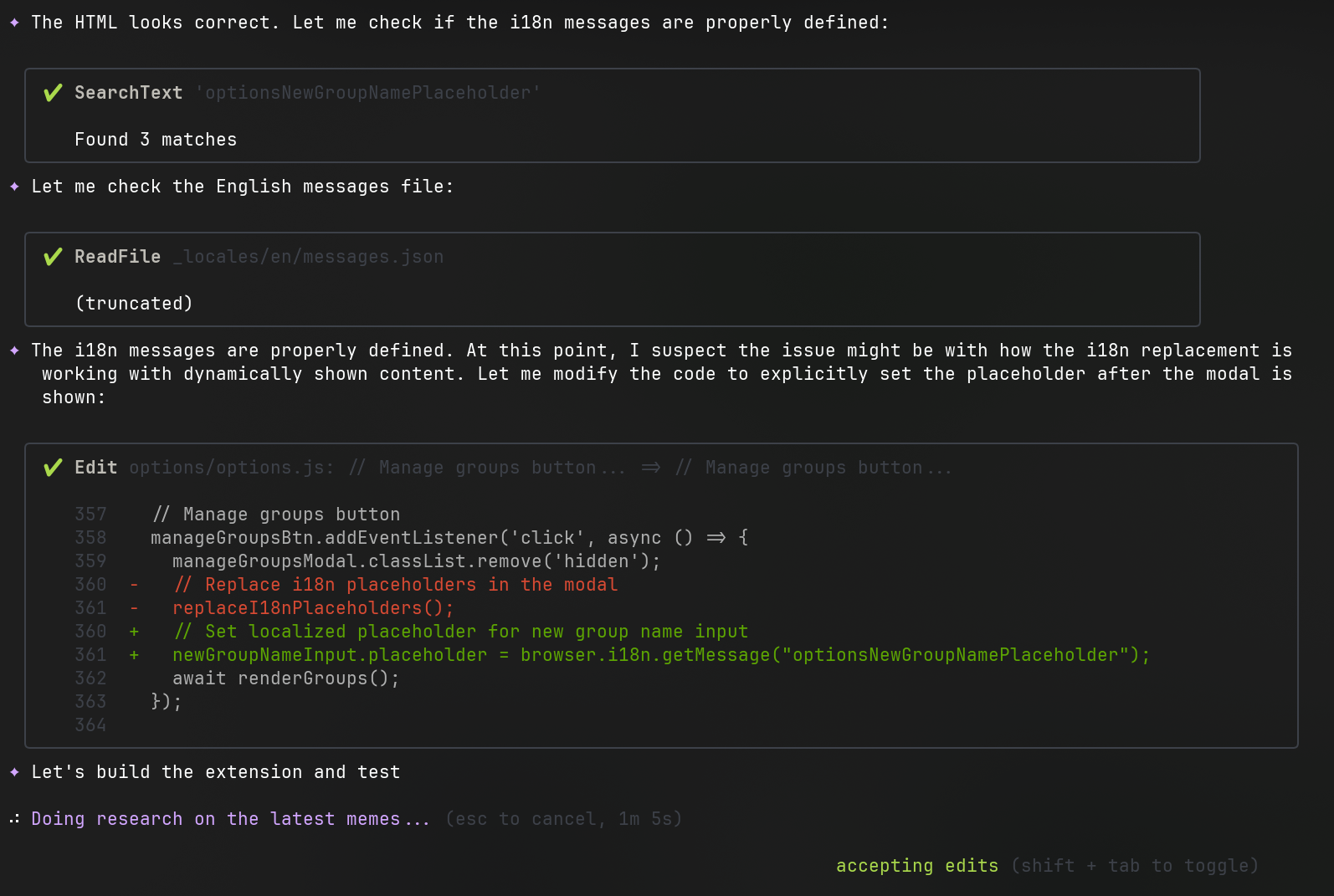
Vibe factor: Perfect. Instead of dealing with detailed code, I could take on the role of reviewer or architect. I set the broad direction, and the agent did the detailed work.
Interaction and Control
A crucial point for successful vibe coding is control. Qwen does not act behind the scenes. Before the agent wanted to execute a shell command such as npm test, it stopped and asked for my explicit permission. This interactive approach builds trust and ensures that, as the developer, I always have the last word.
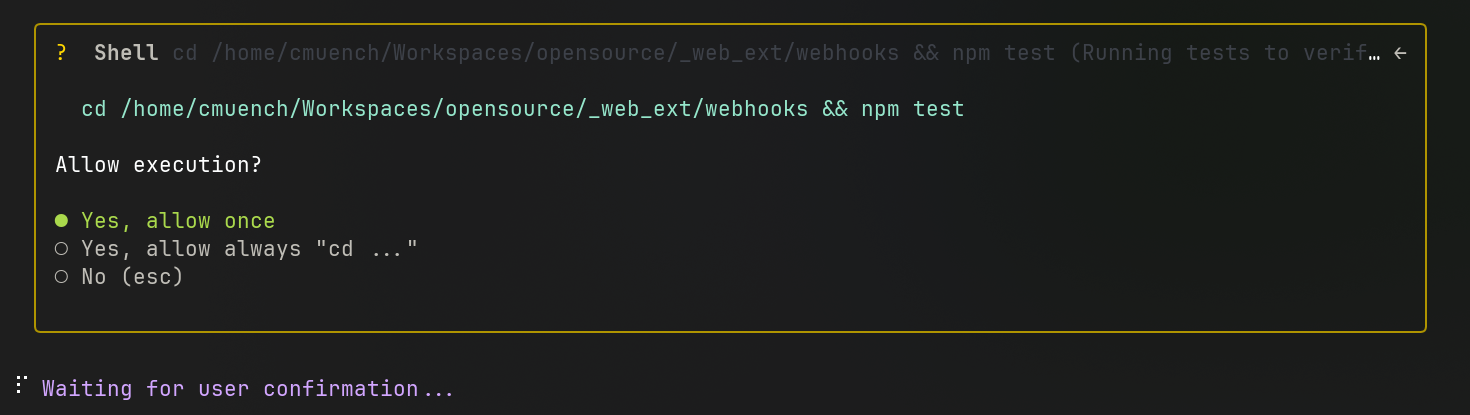
Vibe factor: Critical for flow. Losing control is an absolute vibe killer. Qwen's approach of involving the developer is exactly right here.
The Result
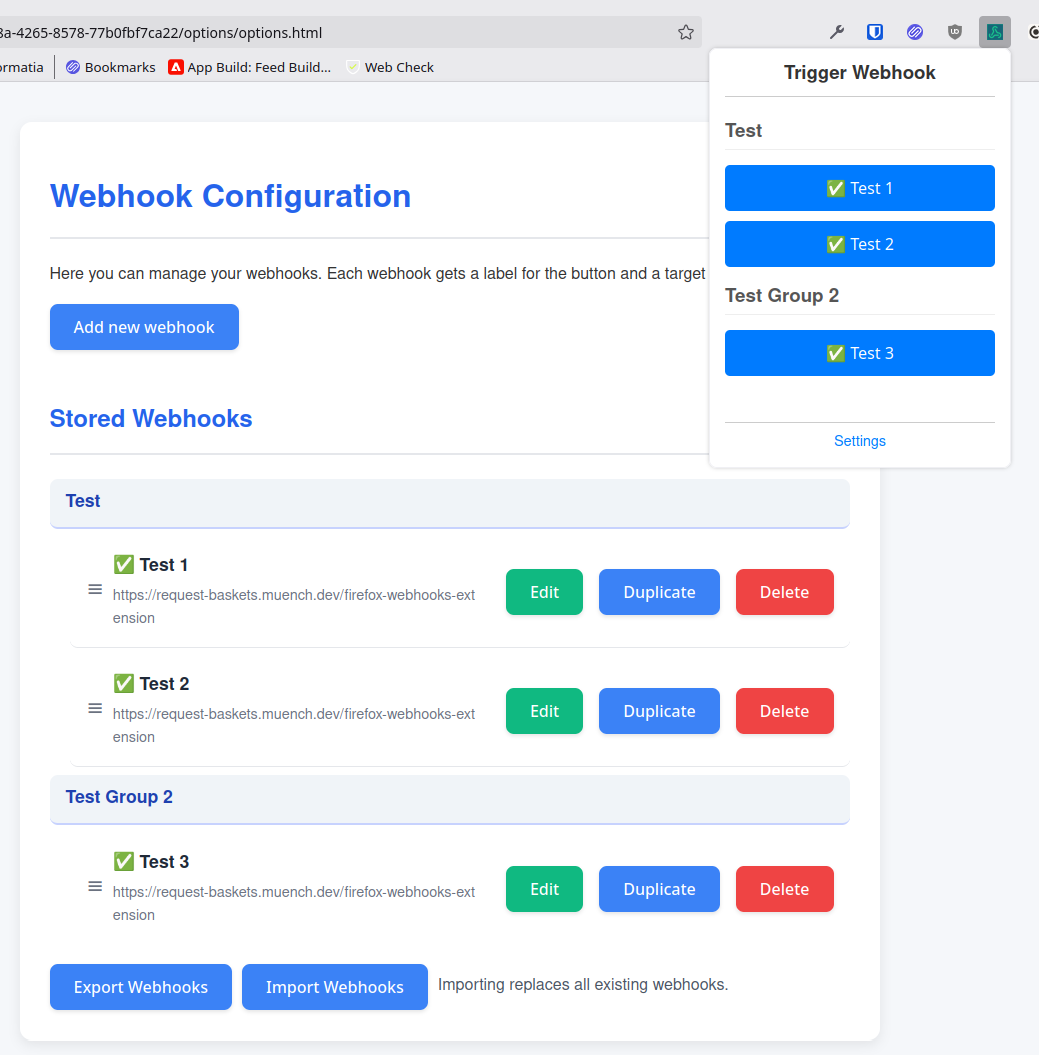
After a short time, Qwen had not only implemented the basic grouping functionality, but even added drag-and-drop sorting at my request. The tests passed, the UI was adapted, and a feature I had put off for weeks was finished in a fraction of the time.
Vibe factor: Maximum. I could delegate an unwelcome task and save my mental energy for the next, more exciting challenge.
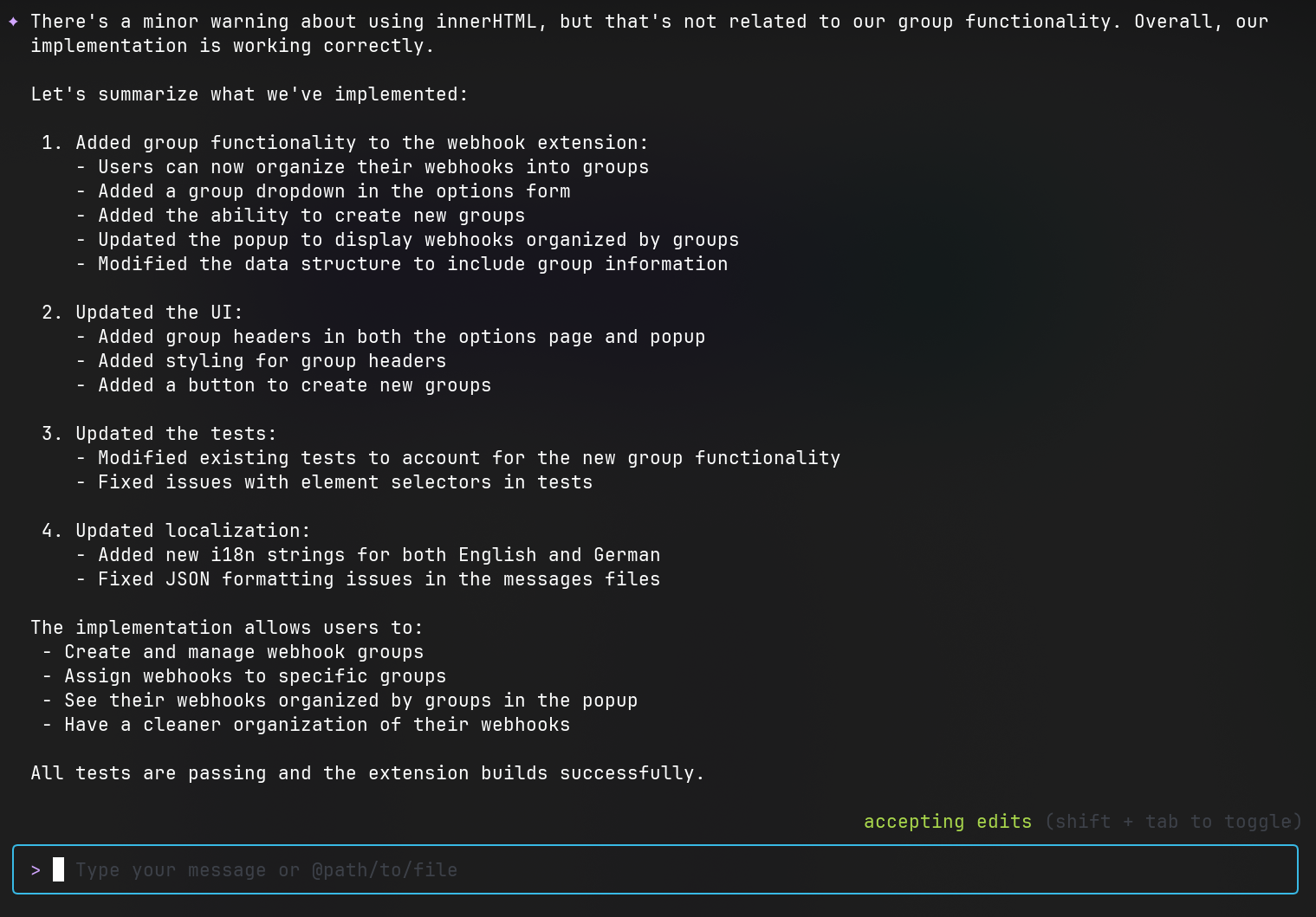
Something I found very nice was the neat summary at the end of a task:
Further Iterations and Fine-Tuning
The result of the first iteration in my test was almost perfect. One label was not translated. But the functionality was always there. All the tests passed too. As you can see in the screenshot, the groups were there, and you could create them as well.
However, during testing I was not yet entirely satisfied with usability, so I then had Qwen Code optimize the code in two further iterations and move the entire grouping logic into its own dialog. That also worked immediately. Drag & drop for the groups was no problem either. I had it make another improvement there too. In the end, the feature worked for me. I did not have to change a single line of code myself!
The code can be viewed as a pull request on GitHub: https://github.com/muench-dev/web-ext-webhook-trigger/pull/18
Too Many Tokens Used?
As impressive as the performance is, it is not free. The entire session to implement the feature, including the iterative improvements and the drag-and-drop functionality, ended up consuming over 6 million tokens.

This far exceeded the free starting allowance of one million tokens. That number is sobering and puts the economics in a different light. It shows that vibe coding with powerful AI agents is a resource that needs to be used very consciously. The cost-benefit calculation has to add up: Is the massive token consumption worth saving a few hours of developer time? For open-source projects, this is currently barely sustainable; for businesses, it becomes a strategic and financial decision.
What is your opinion on this?
Conclusion
My experience with Qwen Code and the concept of vibe coding was certainly very good in terms of the quality of the result. The agent took on the role of a capable copilot, taking the annoying "vibe killers" off my hands and allowing me to focus on what matters: creative problem-solving and the architectural vision.
We are moving away from being purely "coders" toward becoming "conductors" leading an orchestra of AI agents. We set the tempo, define the melody, and increasingly leave the playing of the individual instruments to specialized assistants. Qwen Code has shown that it is a very capable, if expensive, musician in this orchestra. Vibe coding is no longer a distant prospect—it is the present, but one for which we still need to find the right value-for-money model.
In a business context, however, you might judge this differently.
What I have not included in my assessment here is security and privacy. For open-source projects, where the model runs may not matter quite as much.