valantic has officially become a Select Partner in Anthropic's Claude Partner Network (Services Track) — one of the very first consulting and solutions companies in Europe to do so. I had the opportunity to contribute to the substance of this process and was personally part of the training required for it.
What This Partnership Means
A partnership with Anthropic is not just a marketing agreement. To become a Select Partner, you have to demonstrate that you really understand the subject: Claude, the Anthropic ecosystem, the architecture behind agent systems. And you have to be able to pass on that knowledge — internally to colleagues, but also in customer projects and training sessions.
The thinking behind this makes sense: Anthropic wants to ensure that implementation partners do not just sell licenses, but deliver genuine added value. That requires the people advising customers to know what they are talking about.
London: Training to Become a Trainer
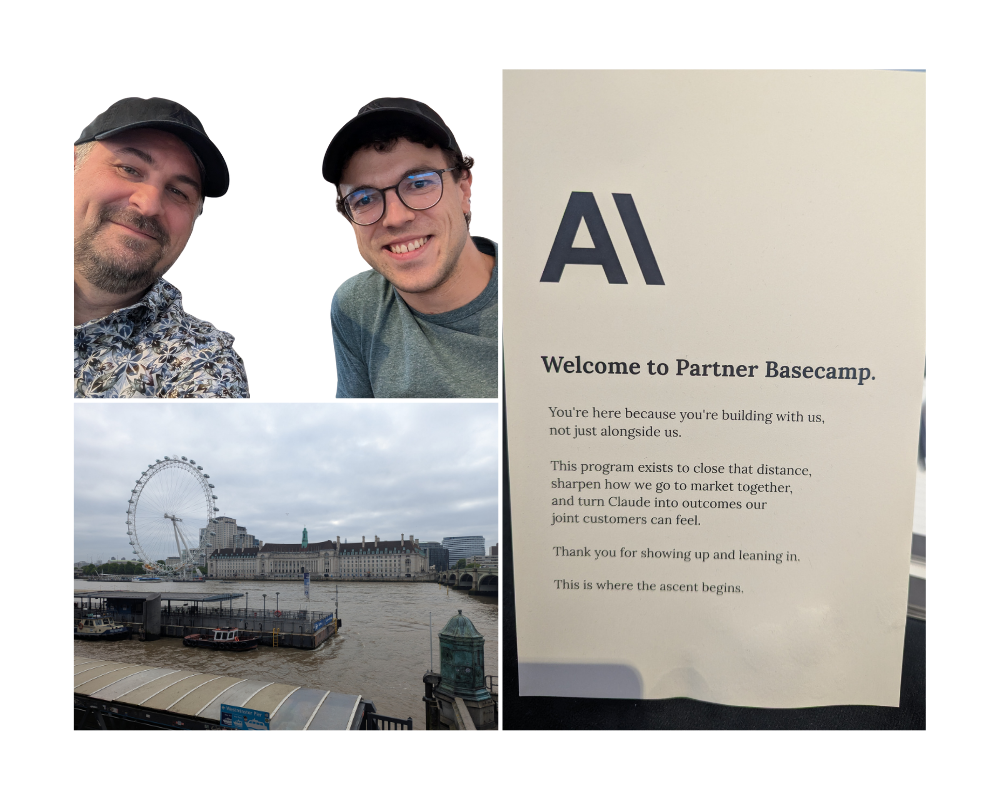
Part of demonstrating this was a training course in London that I attended together with my colleague Alexander Weinfurter. The goal was clear: we were to acquire the knowledge needed to train others — both internally at valantic and for customers.
In terms of content, it was an intensive format. We explored evaluating prompt results in depth — a topic often underestimated in practice. It is not enough to build a prompt that works at first glance. You need to be able to measure systematically whether a model responds consistently, correctly, and appropriately for the use case at hand. There are methods and frameworks for this, which we worked through in London.
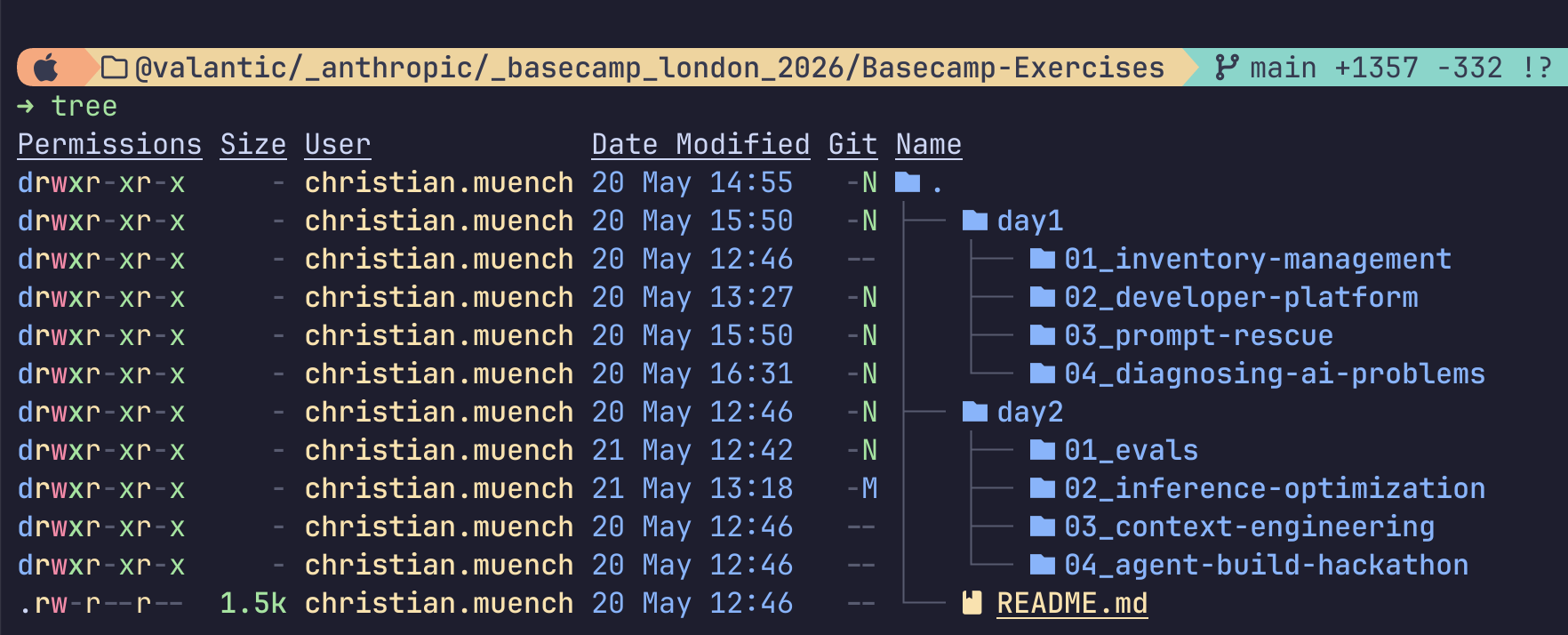
Another focus was building and deploying agents in the cloud. We covered how to set up production-ready AI agents, what infrastructure is behind them, and where the typical pitfalls lie. This is precisely the area that determines success or failure in many projects: not the model itself, but how it is embedded and used.
We also compared various Anthropic models and developed a sense of which model makes sense for which purpose, and when.
What I personally enjoyed most: the direct exchange with Anthropic employees, AI architects, and my valantic colleague. Alexander, for example, was much better at optimizing prompts. That is how you learn from each other. Formats like this give you a different perspective from documentation and blog posts. Questions you cannot easily ask in everyday work can be answered directly there.
What This Means for Customers
When I look at valantic's page on Claude implementation, I see exactly what we worked on in London reflected there. The approach is not "switch on AI and you're done," but a structured process: from initial exploration through a pilot with a measurable business case to a company-wide rollout.
I find one aspect valantic explicitly mentions particularly important: many companies fail when moving from individual tests to production use. Not because the model is bad, but because strategy, governance, and integration are missing. That matches what I experience in projects. The technology is rarely the problem.
As a concrete starting point, valantic offers Claude Code workshops for development teams — a direct, practical route into Anthropic's agentic coding capabilities. For developers who want to understand what AI-assisted software development looks like in practice, this is a good first step.
Select Partner status also means that valantic has direct access to Anthropic expertise and roadmaps. In a field evolving this quickly, that is no small matter. Getting earlier access to information or models is a competitive advantage, especially right now.
Conclusion
I am glad valantic took this step — and even more glad that it involved genuine, substantive effort. Training in London, in-depth work on evaluation, deployment, and architecture, direct contact with Anthropic. This is not a badge on the website, but a foundation for projects that actually work.
Anyone wanting to take Claude seriously in an enterprise context now has a contact at valantic who knows what they are talking about.