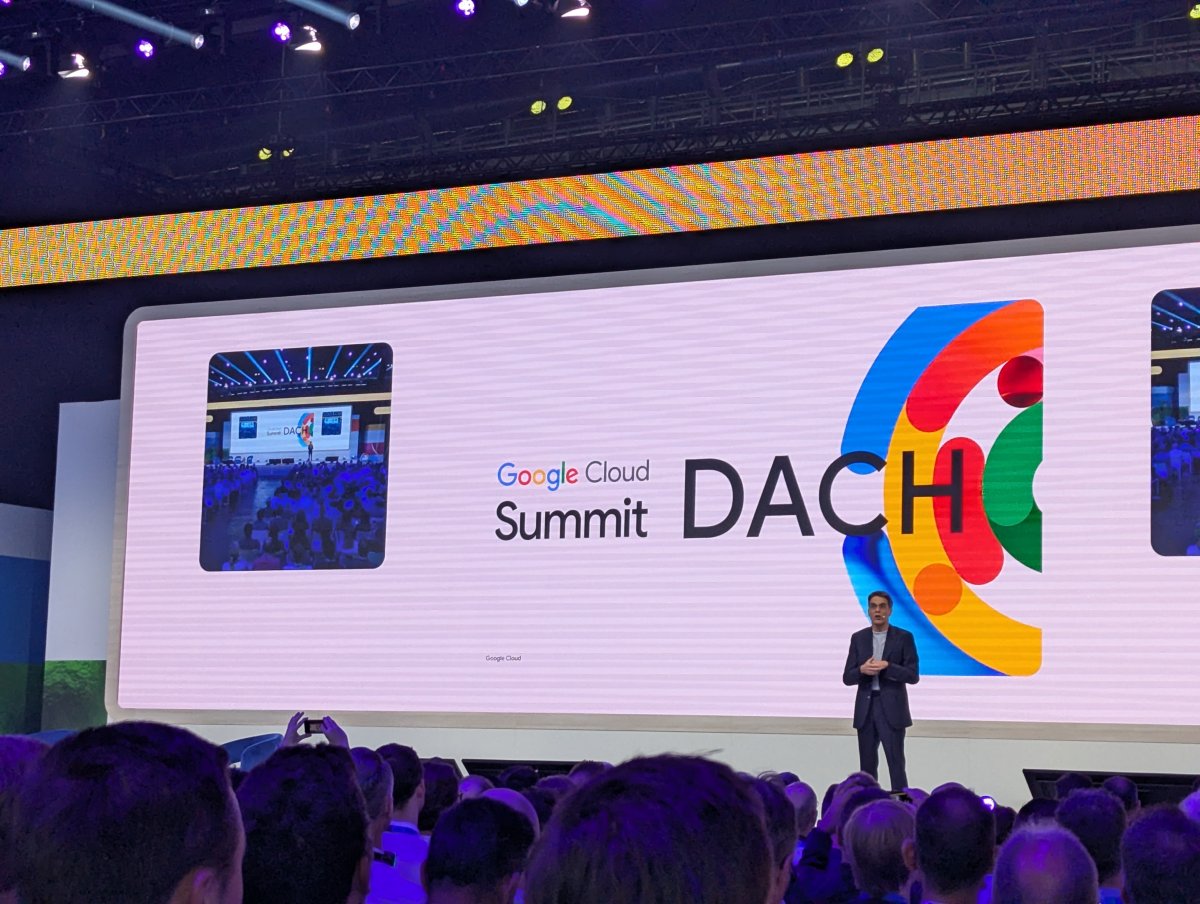
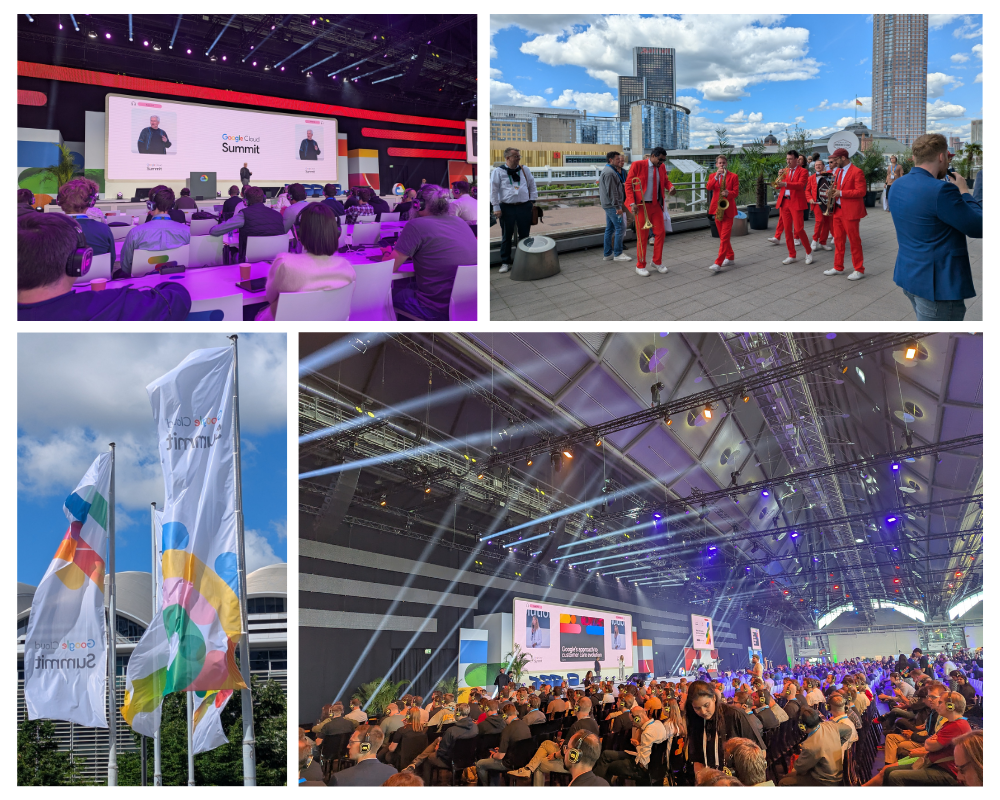
Last week I attended the Google Cloud Summit DACH in Frankfurt for valantic. The journey was relaxed: by train with the Deutschlandticket, climate-friendly and without the stress of finding parking. Even the supporting program set the tone for the two days — large-scale, professional, well thought out. Several thousand attendees, a free event including food and drinks. Google is spending real money on this.
Day 1: The AI Experience Walk
For me, the first day revolved around the AI Experience Walk — a kind of walk-through AI exhibition where Google presented its solutions along the entire value chain. Everything was represented, from the first customer contact to internal process automation.
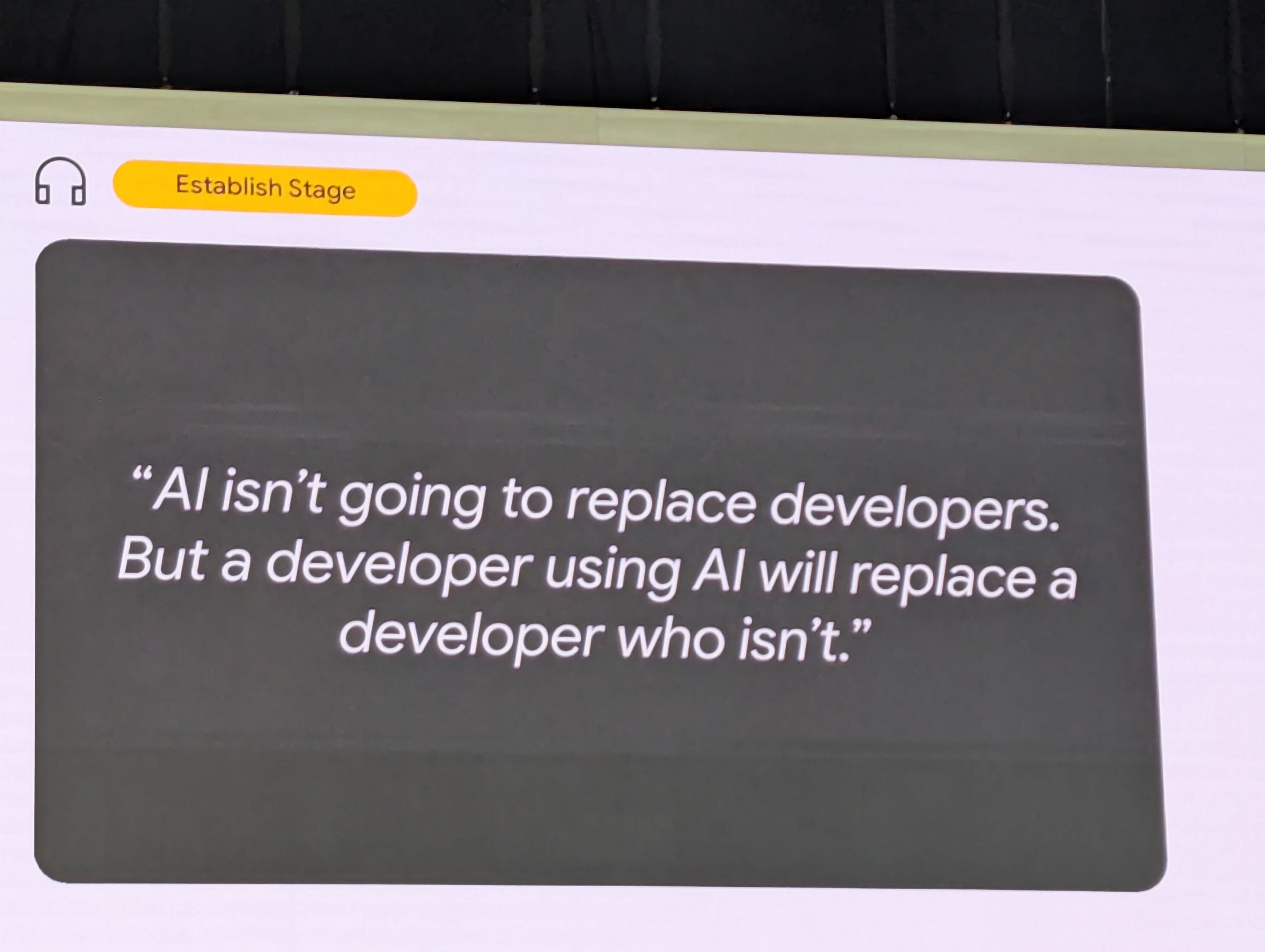
Google itself shared insights into how development has changed through the use of AI. More and more developers work exclusively with prompts and no longer really use the IDE itself.
What kept coming through for me was that "grounding" simply needs to be taken much more seriously. Tests need to repeatedly and automatically verify the results, particularly when working with your own data. Test-driven development is back, but different from how it used to be.
What impressed me most: live remote video translation into 15 languages, in real time, directly in the video stream. This was not a demo video or a "coming soon" — it worked. Moments like that show where AI really stands right now. Not everything is still just a promise.
A second major topic on the first day was digital sovereignty. This is not a new topic, but it was striking how prominently Google positioned it. Who controls the infrastructure, who has access to the data, where do the models run? For many companies, these are no longer academic questions but concrete decision criteria when choosing a platform.
Day 2: Hands-on Rather Than Hype
Day 2 was more valuable for me. Less stage, more workshop. In the hands-on sessions, you could get straight to work yourself — and that makes a difference.
I migrated an MCP server to Google ADK live — right at the event, not prepared beforehand, not in a controlled demo environment. It worked, and that was a good sign. The ADK is practical enough to work with spontaneously.
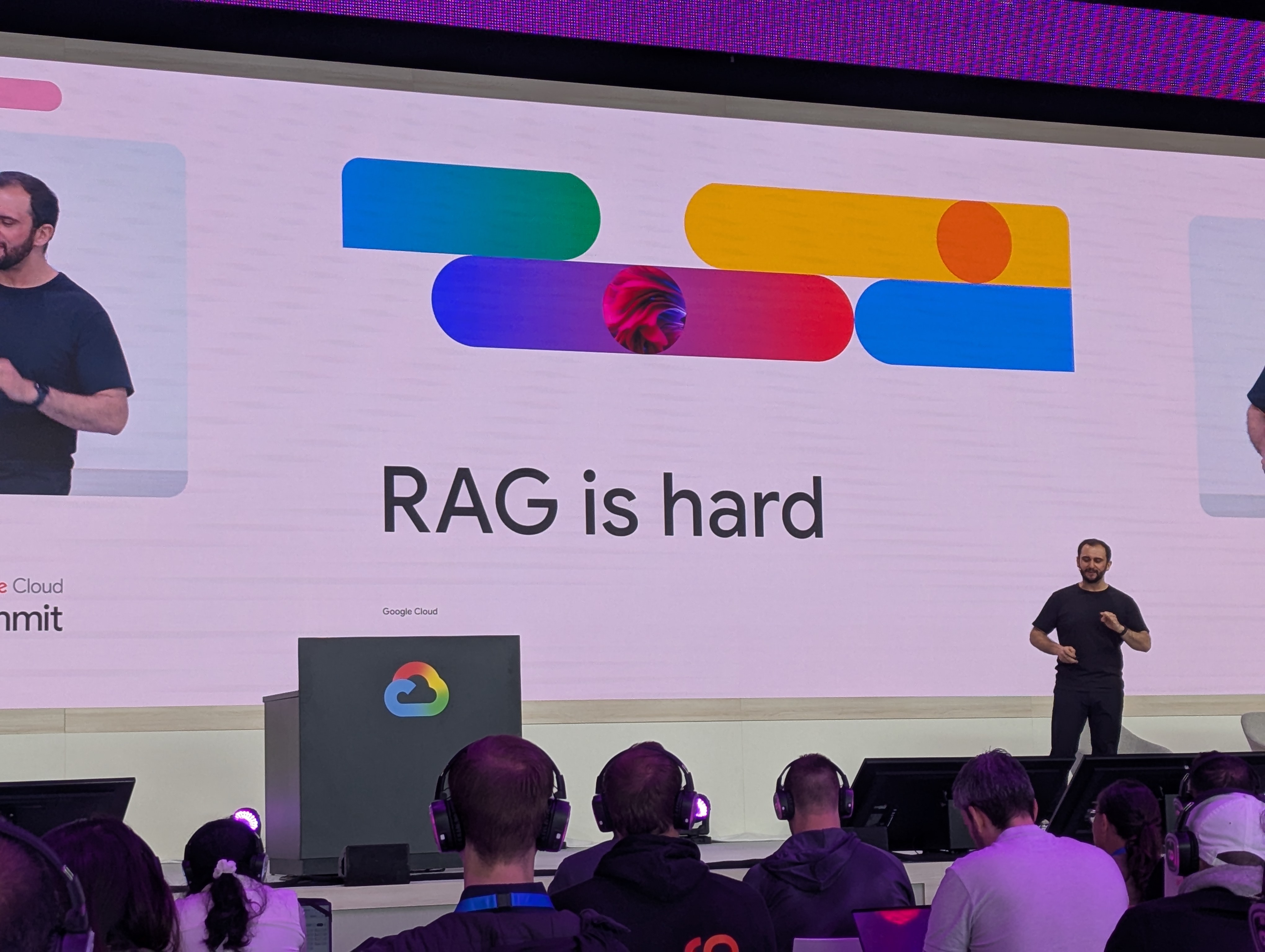
A talk on RAG (Retrieval-Augmented Generation) using a specific use case — legal texts — was particularly interesting. The challenge with legal documents is not just finding the right passage — but also citing it correctly, with a reference to the relevant section and in the right context. That is exactly what was demonstrated. A use case with real requirements, where poor results would have real consequences. RAG needs to work more than just "most of the time" here.
Google as the Only Full-Stack AI Provider
One observation runs through both days: Google is the only provider that delivers hardware, software, and platform for AI from a single source. Its own TPUs, its own models (Gemini), its own cloud infrastructure, its own developer tools. That is a different starting position from providers that rely on external chip manufacturers or third-party infrastructure.
Whether that is an advantage depends on what you are looking for. Anyone wanting to go deep into the Google ecosystem gets a consistent stack experience. Those prioritizing independence and portability may see it differently. Still, I find it remarkable that no other hyperscaler can offer this combination at this depth.
Conclusion
Two days, several thousand attendees, no admission fee. Google is visibly investing in community and visibility — and it pays off. You do not leave an event like this with finalized decisions, but with a good sense of where things are heading.
For me personally: day 2 delivered more than day 1. Not because the AI Experience Walk was uninteresting — but because nothing can replace hands-on experience. Migrating an MCP server live and getting immediate feedback is worth more than ten slides on the same topic.
If you have the opportunity to attend the next Google Summit: it is worth it.