On Tuesday, it was that time again. The first PHPUG meetup of 2020 was on the calendar. This time, it was at UDG Mainz's offices.
10 Years of PHPUG
Matthias started the evening by pointing out that we get to celebrate the tenth anniversary of PHPUG Rheinhessen this year. That makes our PHPUG part of the established furniture of Germany's PHP user groups. We will see—perhaps the next meeting will include a little look back and a surprise...
There were two exciting topics on the agenda, which prompted around 20 participants to make the trip after work that evening. Unfortunately, I was a little late myself. When I arrived, though, everyone was still engrossed in conversation. Apparently, they had waited for me, which I thought was very nice.
DDEV: Painless local PHP development
We started with a presentation by Carsten Dietrich, who introduced the tool ddev. Written in golang, the tool is excellent for quickly generating a local PHP development environment. You can configure a wide variety of settings, which can then also be versioned for other developers on a team. Another great thing about the tool is that it runs reliably on all common platforms.
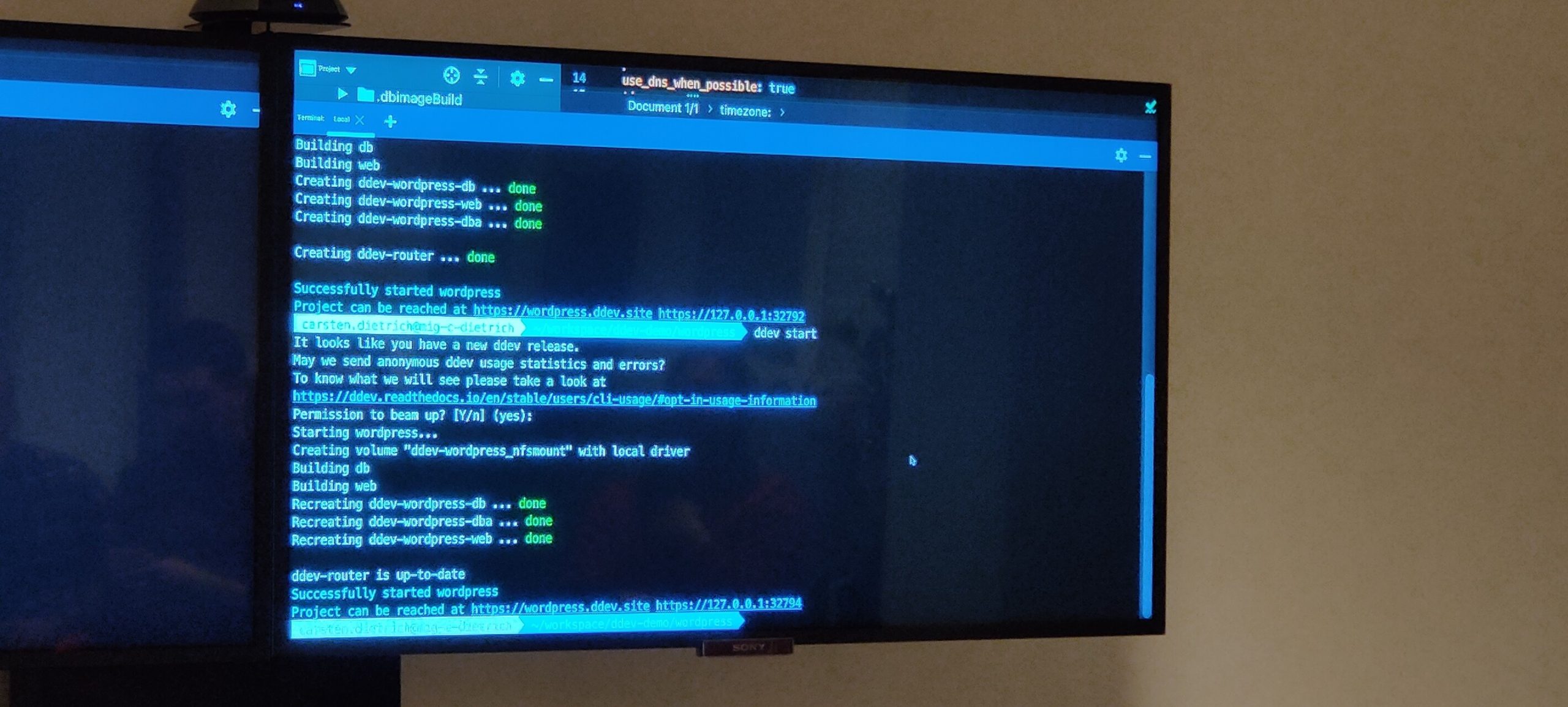
ddev in action - The real deal is on the command line
The environment itself is started in Docker, and here too you have the option of making configuration changes. I have now also tried it on my Linux machine myself, and I have to say it really works very well.
How Good Are My Tests Really?
The second item on the agenda was a presentation by Stephan Hochdörfer. In his usual practiced manner, he provided an insight into code quality. As it turned out, it is not that easy to define what good code even is. ISO criteria alone are definitely not enough.
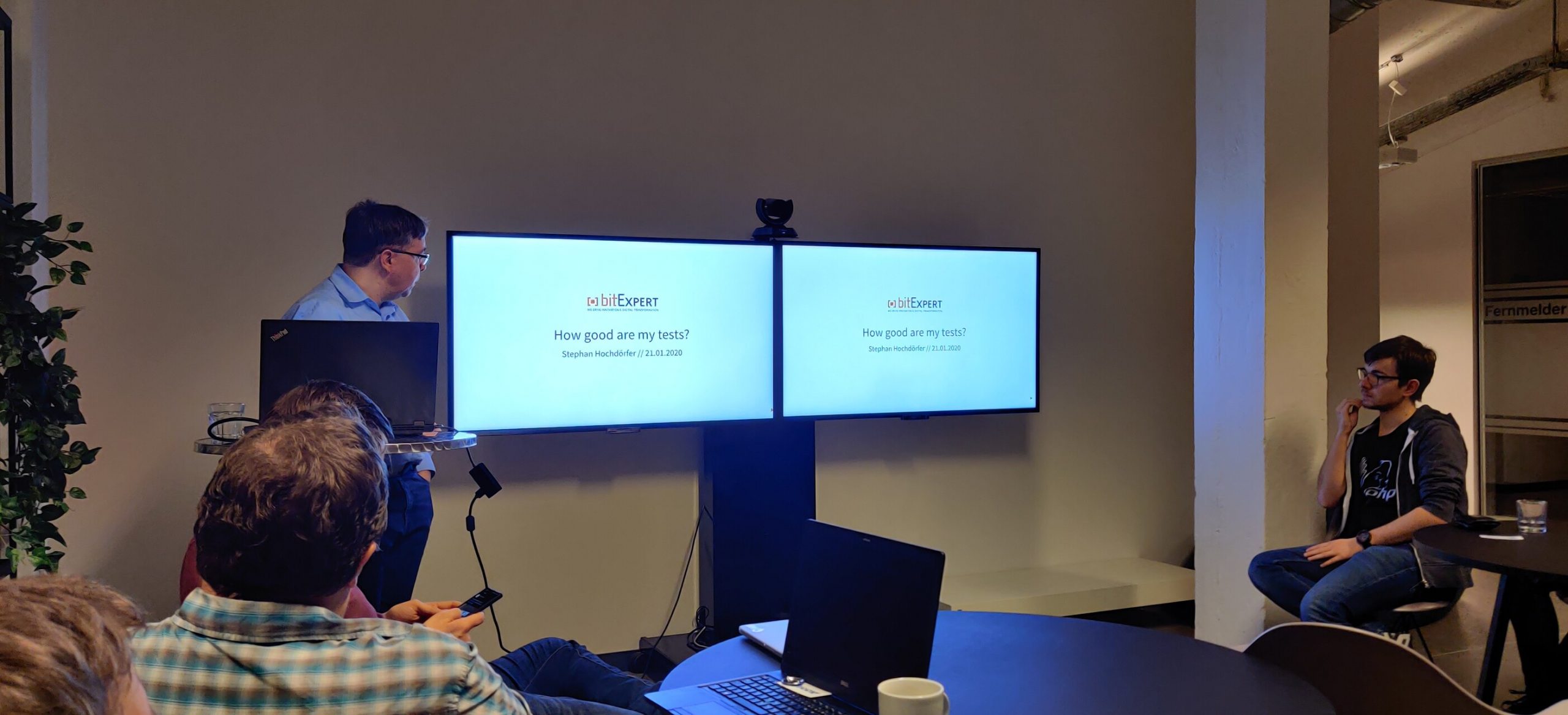
The main part of his presentation focused on the tool Infection PHP. Stephan used it to check his DI container disco, for example, and was surprised himself by everything it uncovered. And that was despite very good test coverage.
Infection PHP is a framework that enables mutation testing. The subject itself is rather specialized. Basically, the source code is modified. Among other things, operators are swapped, and it is checked whether the test then fails. If the test does not fail, the test coverage is insufficient. The logic is essentially turned around.
Conclusion
As always, it was an entertaining evening. It is interesting, too: there were new faces visiting again this time. The PHP scene seems to be alive. New groups are also forming, such as the recent one in Darmstadt. That is very good, and we can look forward to seeing how things develop.