
My son wanted me to install a Minecraft plugin on our server. I was at work at the time. Instead of putting the task off until later, I handed it to my “Homelab” Hermes profile. The agent already knows the server from its inventory and manages it for me.
It handled the installation and discovered a problem with the update source during setup: the updater pointed to a different project with a similar name. The agent brought this to my attention and suggested an appropriate correction. We agreed on the change together and implemented it. We also adjusted the settings for safe operation together.
From assignment to verification
The agent did more than install the plugin file. It checked the server’s state, identified the issue with the update source, suggested an improvement, and carried out the agreed changes.
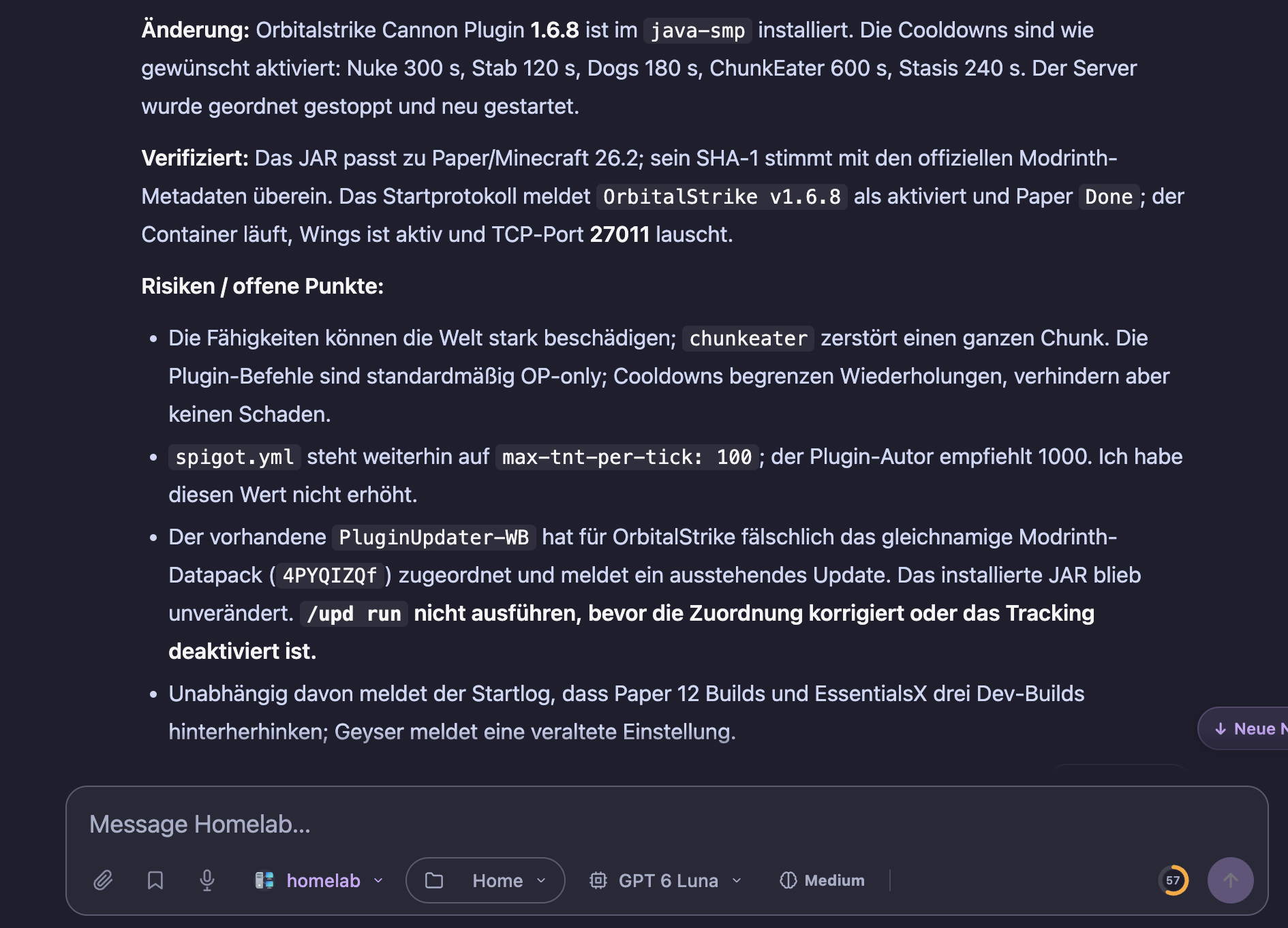
Afterward, it restarted the server in an orderly manner and checked that the plugin was active, the server started cleanly, and the updater correctly recognized the configured plugins. The checks were successful.
An agent with context about my homelab
The difference from a one-off chat response: my Homelab profile already knew the server and had access to the information needed to administer it. I did not first have to explain which machine I meant or carry out the individual steps myself. I could hand over the task and also received feedback when the agent encountered a problem.
The agent handled the routine technical work. We agreed together on changes that affected the server. It then verified the result. That is exactly the combination I care about: the agent can complete tasks independently in a familiar environment, flags problems, and involves me when a decision is needed.
For me, this was practical relief while I was at work. My son got the plugin he wanted sooner, and I could keep working.