It's hard to believe, but PHP is celebrating its 30th anniversary this year. Three decades! For many people, PHP might just be the language powering WordPress or Magento, but for me it is a constant, a companion that has been with me through most of my professional career. I still remember vividly how, in my early twenties, I first encountered PHP3 (not 5.4, but 3!)—a time when object orientation was still a foreign concept and you worked with functions as if there were no tomorrow.
The beginnings: PHP 3 and the wild days
Compared with today's PHP, PHP 3 was a wild, untamed language. It wasn't stylish, it wasn't elegant, but it was efficient and easy to learn. Back then, I was still working with ASP (without .NET). PHP was a new playground for me. Thanks to Jürgen Bohn, who introduced me to PHP at the time. You could get results quickly, and that was exactly what made it so attractive. I remember projects where we built entire web applications with functions and global variables. It was a time of experimentation, of "just giving it a go," and it was incredibly fun.
From junior developer to Zend Certified Engineer
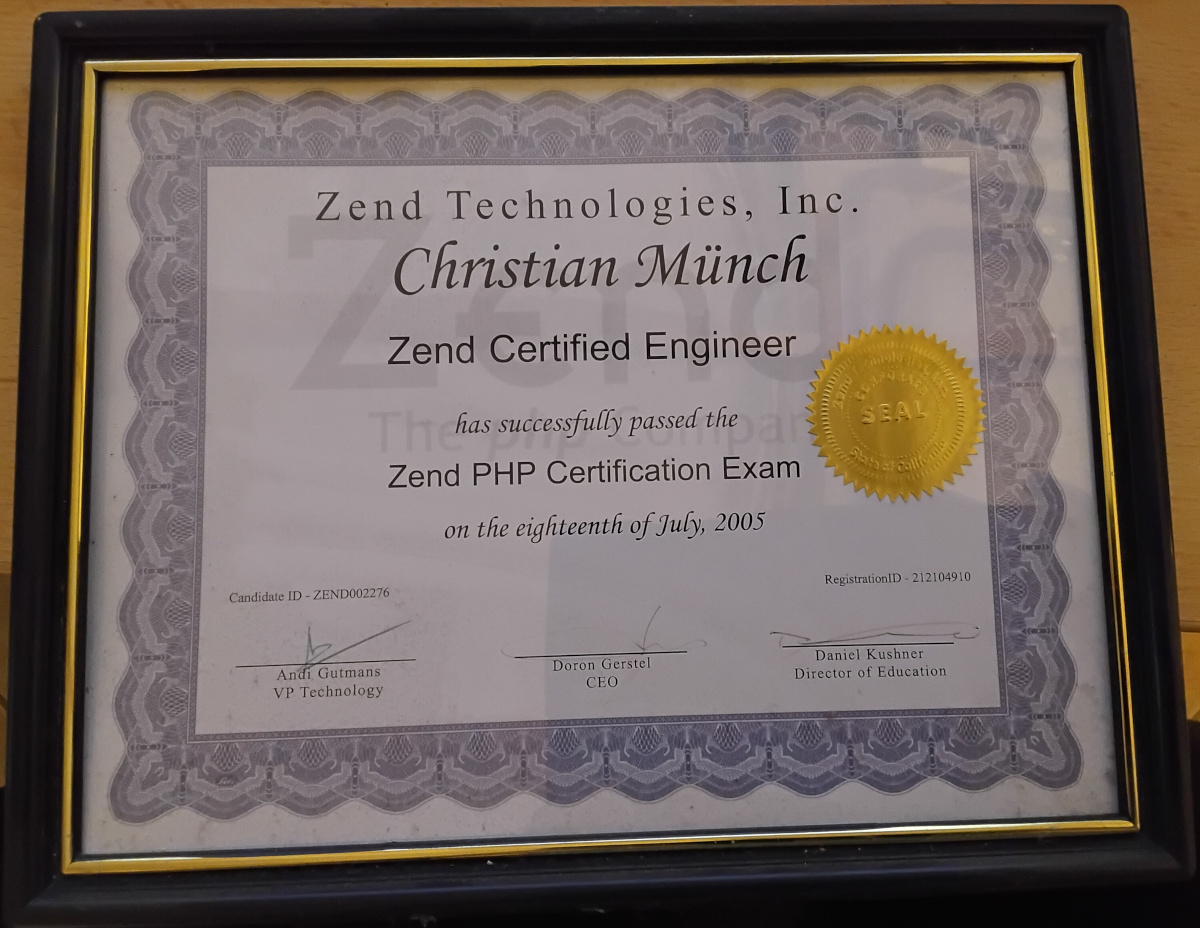
My enthusiasm for PHP was so great that I decided to study it more deeply. The PHP community was still fairly small back then, but extremely helpful and open. I was one of the first 1,000 Zend Certified Engineers—a certification whose fees I paid out of my own pocket at the time because I firmly believed it was an investment in my future. It was a sign of my commitment and my belief in this language, which many people looked down on back then.
A little dusty, but I still love it. With the signatures of Andi Gutmans, Doron Gerstel, and Daniel Kushner
Back then, we still learned with books on paper :-)

PHP grows—and I grow with it
Over the years, PHP has changed radically. PHP 4 and 5 brought object-oriented paradigms that took the language to a new level. Suddenly it was possible to build more complex and maintainable applications. Frameworks such as the Zend Framework or later Symfony became established and brought structure to the often spaghetti-code-heavy PHP world. I experienced and helped shape all these developments. From the introduction of namespaces in PHP 5.3 to the performance improvements in PHP 7 and today's modern features—PHP has always kept up.
This is what some of my old code looked like, which you certainly wouldn't write this way today :-)
protected function parseTemplate()
{
  $retval = '';
  $errorReporting = error_reporting(0);
  if (is_array($this->_variables) && count($this->_variables) > 0) {
    extract($this->_variables);
  }
  eval($this->preparePHPCode());  //execute php blocks inside the template
  eval("\$retval .= \"" . $this->_templateContent . "\"; return (\$retval);");
  error_reporting($errorReporting);
  return $retval;
}
It was interesting to see how the tools around PHP developed. From simple text editors to powerful IDEs such as PhpStorm with intelligent code completion and debugging features. Deployment processes also became increasingly sophisticated, moving from manual FTP uploads to automated CI/CD pipelines with Docker and Traefik.
Yes, PHP can even do blockchain! Matthias Gutjahr giving a presentation.
PHP comes of age: Composer, PSR, and the PHP Association
PHP has matured over the years and developed into a language to be taken seriously in the enterprise environment. A crucial factor was the introduction of tools such as Composer, the de facto package manager for PHP. Composer revolutionized how dependencies are managed in PHP projects and made integrating libraries and frameworks much easier. This played a major role in giving PHP developers access to a wide range of high-quality, reusable components.
At the same time, the PSR standards (PHP Standard Recommendations) played a central role in professionalizing the language. These recommendations, developed by the PHP Framework Interoperability Group (PHP-FIG), ensured better interoperability between different PHP components and frameworks. Uniform coding standards and interfaces made it easier to combine and maintain code from different developers and projects. This promoted not only code quality but also collaboration within the community.
Funding for PHP core development was also put on a new footing. With the establishment of the PHP Foundation, there is now an institution responsible for funding and coordinating the language's continued development. This brings greater predictability and stability to the introduction of new features and maintenance of the PHP core. Regular releases with clearly defined roadmaps ensure that PHP continues to improve and incorporates modern language features.
Stephan Hochdörfer is one of my personal PHP heroes.
Magento, n98-magerun, and more
The development of the Magento ecosystem was particularly formative for me. When Magento came onto the market, it was a revolution in e-commerce. I had the opportunity to be there from the beginning and help shape how Magento grew into one of the leading shop systems. Tools such as n98-magerun—a project I'm still involved in myself—arose from the need to simplify developers' everyday work and increase productivity. These community projects, often born out of pure passion, have enormously enriched the PHP world. From simple guestbooks and page counters to large platforms, PHP has it all.
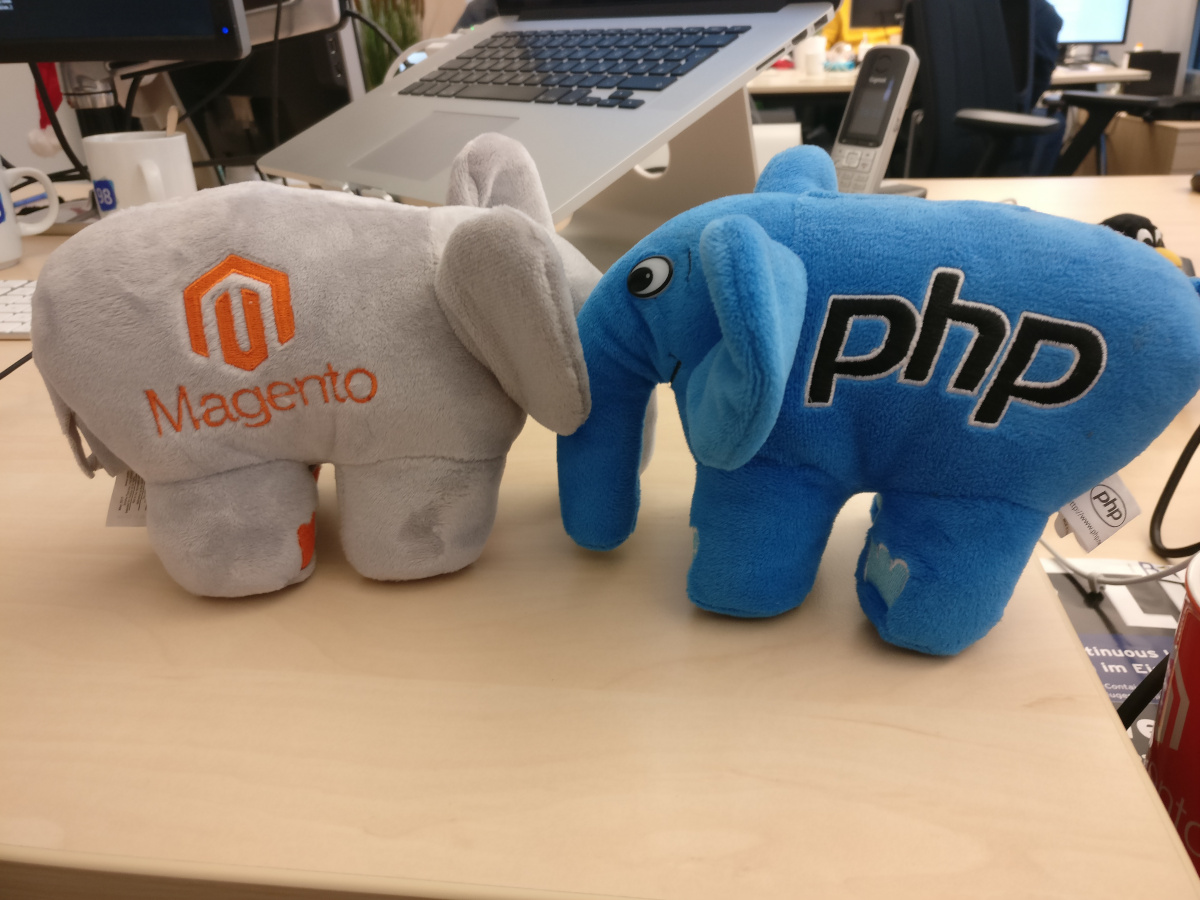
Even though I write less PHP code directly today than I used to, the language is still an integral part of my daily work. PHP applications are at the heart of many of my personal projects, and I continue to follow the development of the language and its ecosystem with great interest.
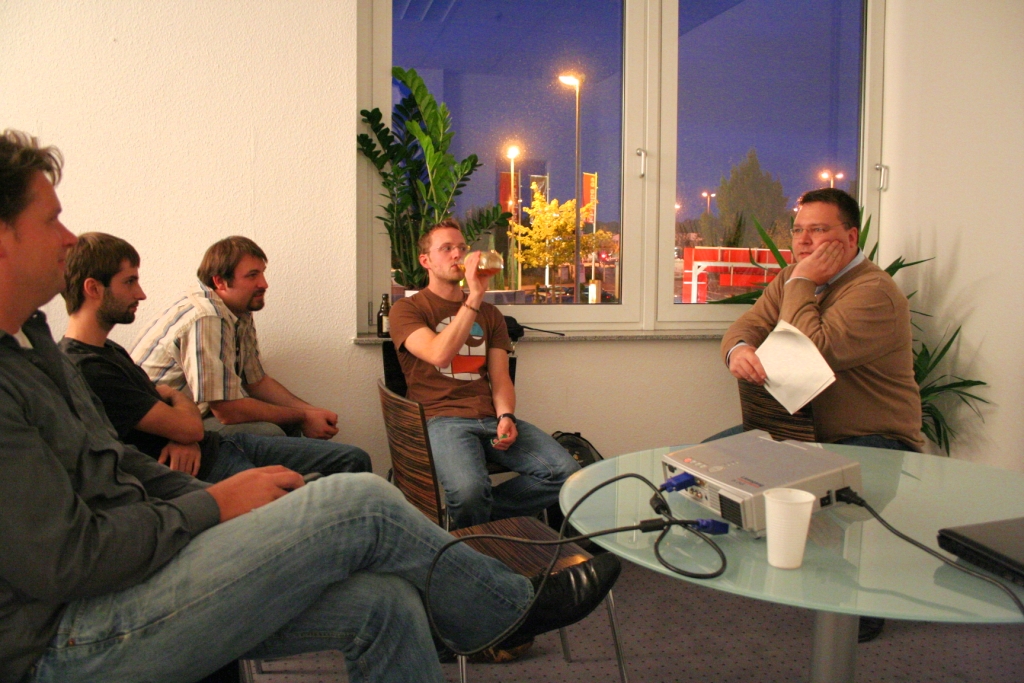
I have also helped shape PHPUG Rheinhessen and the Magento regulars' meetup, and they have shaped me.
PHP has always been discussed outside working hours as well. As in this picture of a PHP UG Rheinhessen meetup, where the topic was HipHop VM, discussed entirely verbally without showing any slides.
The future of PHP
PHP has grown up, but it has never lost its charm and flexibility. It is a language that has grown with its developers and repeatedly adapted to the demands of the times. Congratulations, PHP, on 30 years full of success! You're alive, even though you're often declared dead. Here's to the next 30!