I run a small weather station at home.
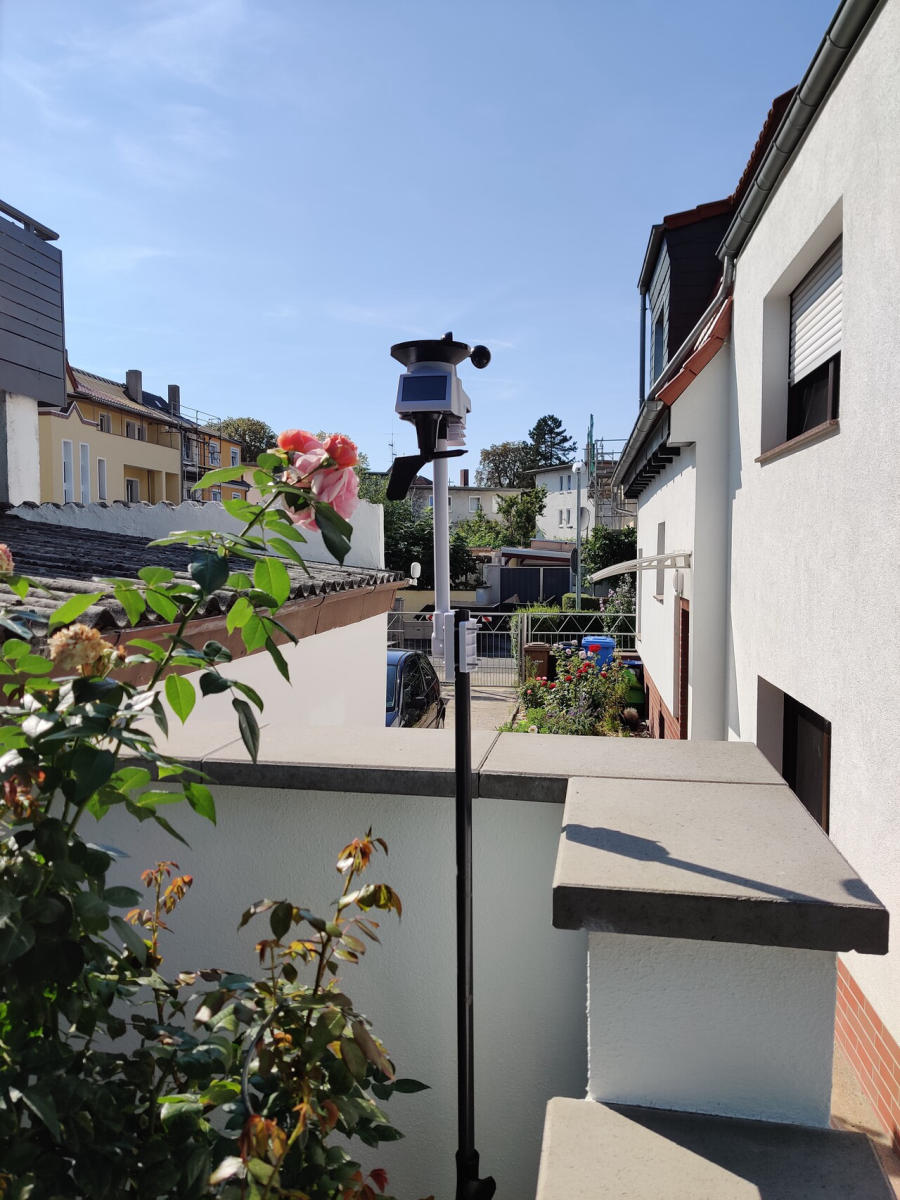
Mounting
- Mounting requires a pole with a diameter of 25–33 mm.
- Four AA batteries (or rechargeable batteries), which need replacing approximately every 6–9 months.
Setup
The weather station transmits its readings several times every few minutes over 433 MHz.
In my basement, I installed a DVB-T stick on a small computer.
A small LXC container with USB devices passed through receives the signal via the antenna and decodes it using rtl_433.
The data is then published to a small Mosquitto server via MQTT.
Node-RED, also running in an LXC container, listens on the MQTT topic, receives the data, and writes it to my Postgres database.
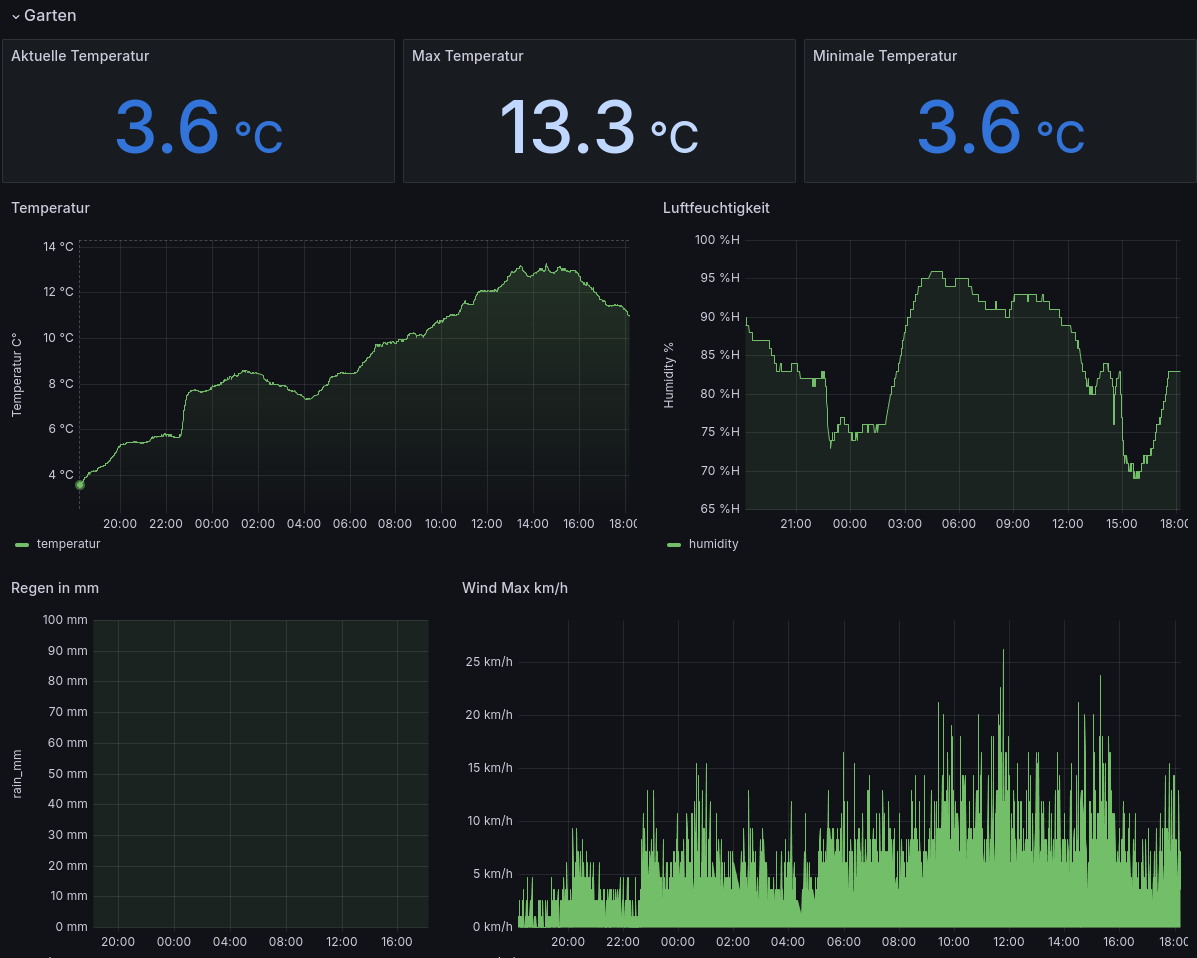
I then publish the data via an API and visualize it in Grafana and Home Assistant.

Software
rtl_433 identifies the weather station as a Cotech 36-7959.
The chip is used in many weather stations.
C code that decodes the data: https://github.com/merbanan/rtl_433/blob/master/src/devices/cotech_36_7959.c
Analysis
In Grafana, it looks like this, for example: